Execute · Entities
The register, and everything that runs on it.
One record per company, fund, SPV, partnership and person. Ownership, structure charts, bank accounts, documents and every report tab sit on that record, and on the Governance plan so do KYC answers, your own KYC reviews and obligations.

Two-factor authentication on every plan · Material changes on an append-only audit trail · CSV import
One record
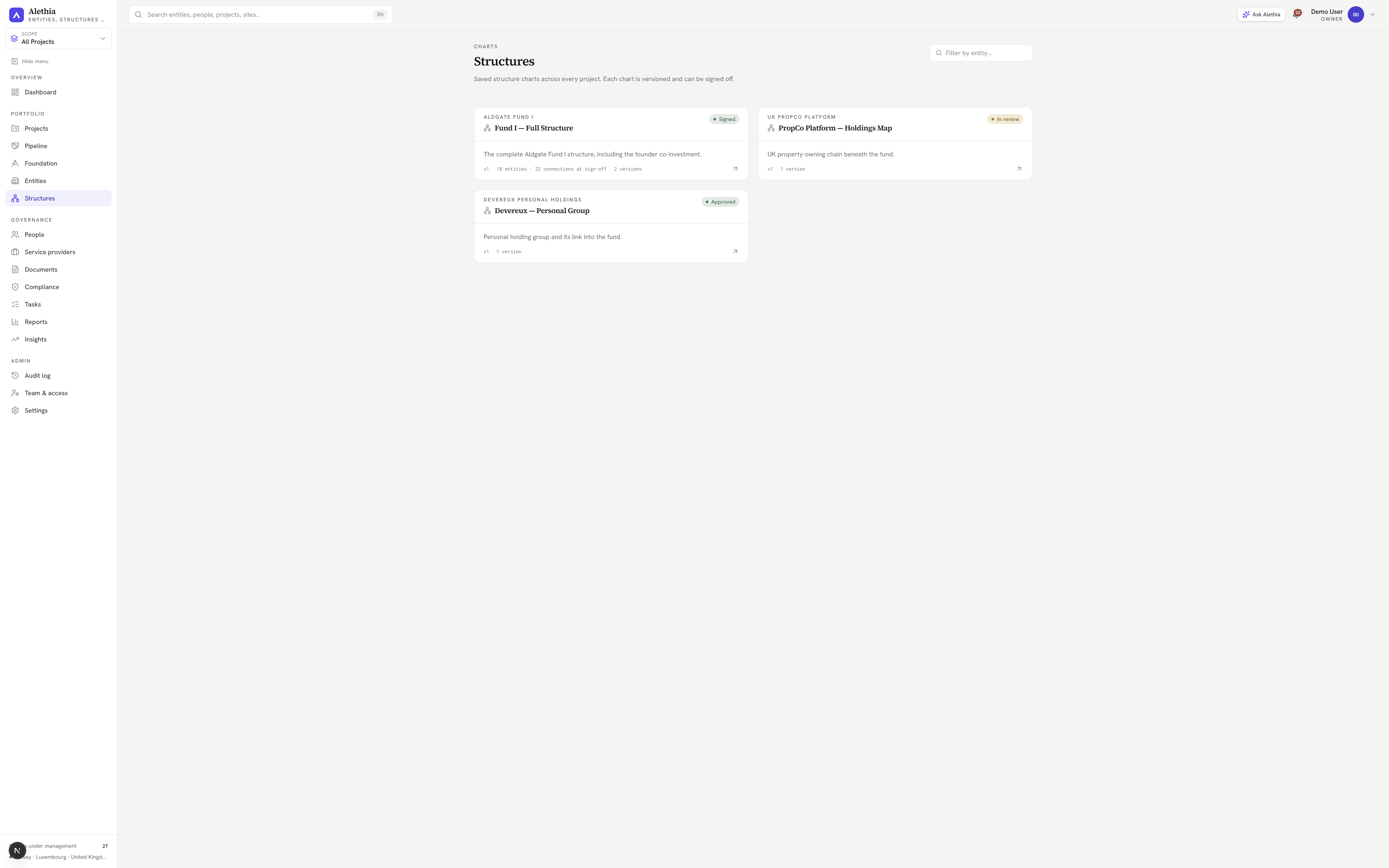
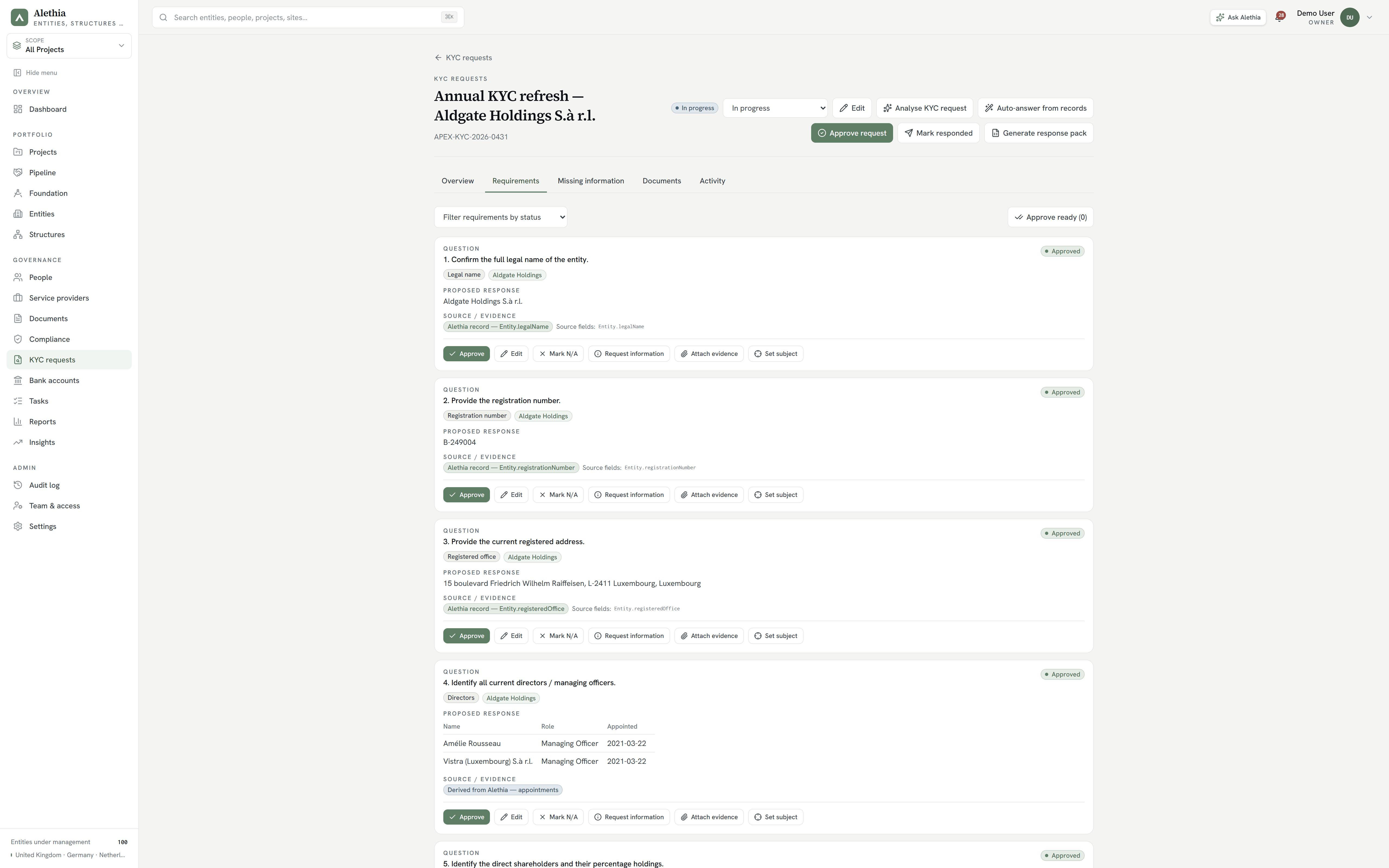
Aldgate Holdings S.à r.l., in four places.
Register row
Chart node
KYC answer
Bank account
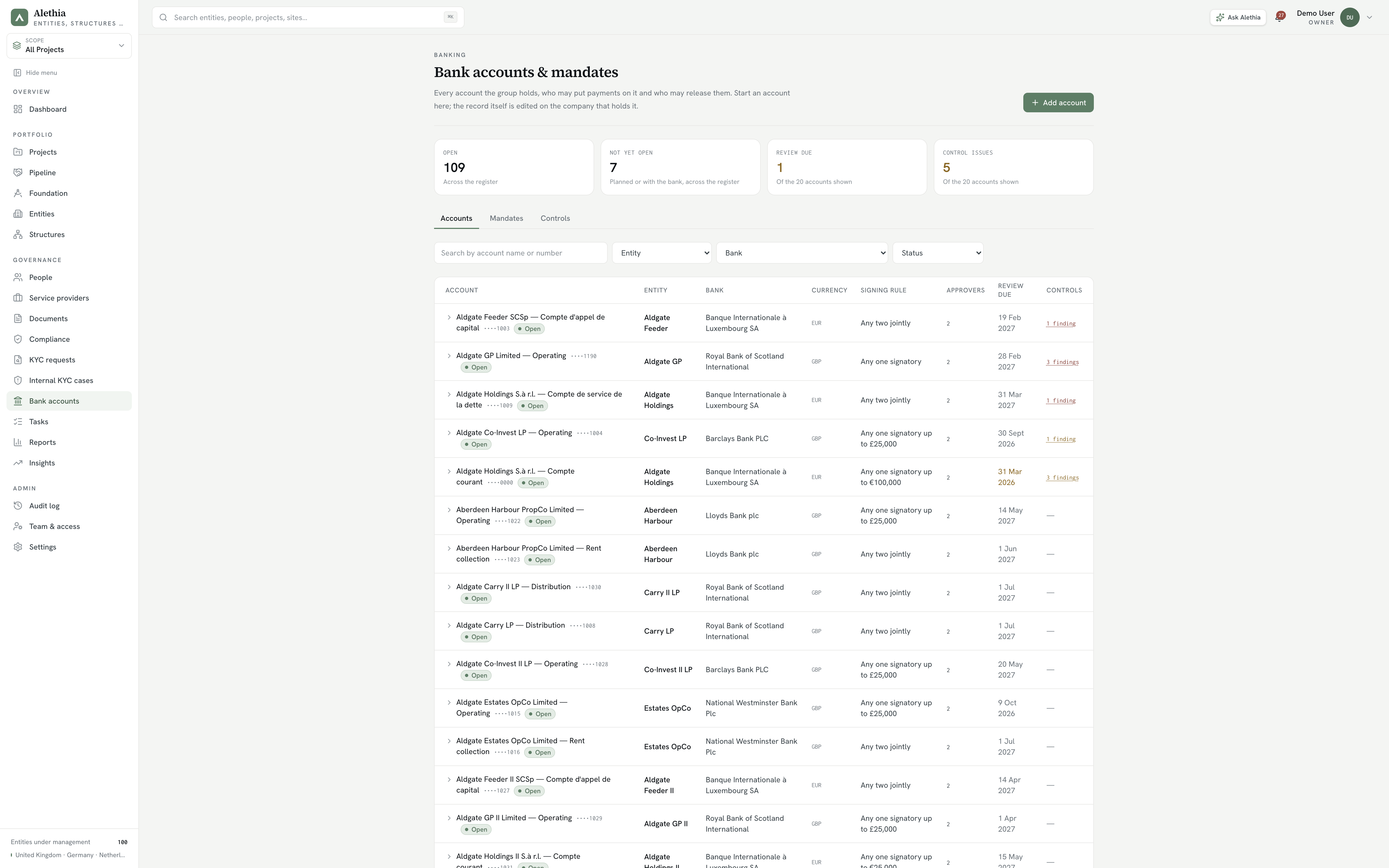
Each is read from the same record. The KYC answer names the field it was taken from.
Reference data
Jurisdictions
249 ISO 3166-1 codes and XK
- GB
- LU
- JE
- GG
- IM
The register's jurisdiction list.
Legal forms
3,446 active
- ISO 20275 Entity Legal Forms, snapshot v1.6, across 129 jurisdictions
The pinned ISO 20275 snapshot, counted by the test suite.
Report tabs
- Entity register
- Officers & appointments
- Ownership
- Beneficial ownership (UBO)
- Trust controllers
- Board interlocks
- Compliance
- Documents index
- Net debt
- Debt ledger
- Intercompany
- Property portfolio
- Fund commitments
- LP register
- CoSec report
- Connections
- Service providers
and 9 more
- Net debt
- Debt ledger
- Intercompany
- Property portfolio
- Fund commitments
- LP register
- CoSec report
- Connections
- Service providers
The report page's tabs.
Where it runs
- Database records: Google Cloud europe-west2
- Uploaded files: Google Cloud europe-west2
- Application servers: Vercel lhr1
- Built in London
Pinned in the deployment configuration.
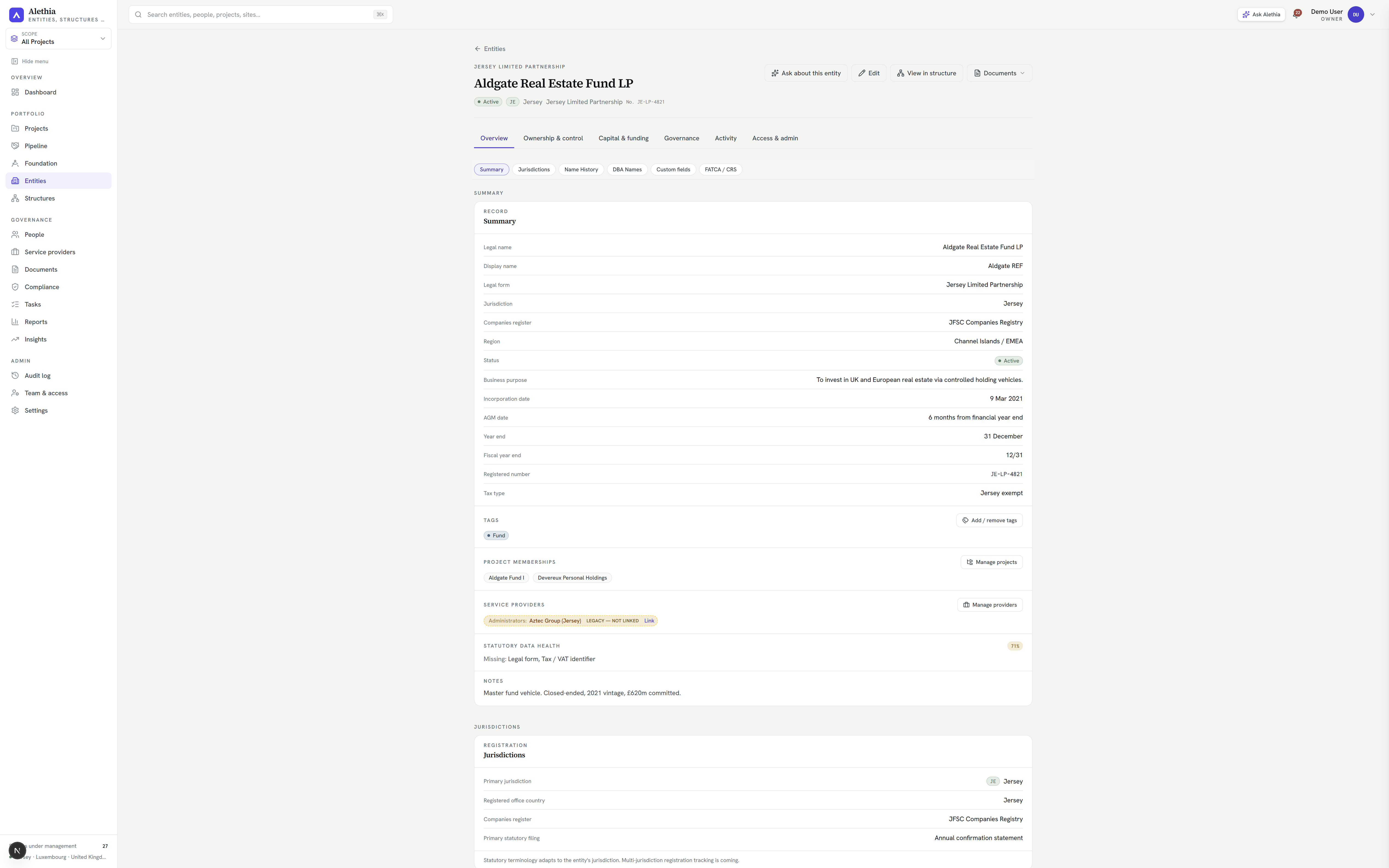
The record
Statutory facts once, key dates beside them.
What it is
A register
One controlled record per entity, person, bank account and agreement.
Ownership per interest
Held with legal, voting and economic bases, multi-parent holdings included.
Bank accounts with controls
Signing rule, approvers, review date and findings per account.
Your own KYC as a case
A checklist applied to the entity, evidence per requirement, sanctions screening, a risk rating, a second-person decision and a review date.
LEI checked against GLEIF
Look up an entity's LEI, see its status and next renewal beside your own record, and keep it once you confirm.
Documents that say what they are
Passport, proof of address, certificate of incorporation, board minutes: each filed as what it is, dated, and every file virus-checked before it is opened.
Report tabs on every record
With an LP quarterly pack and export.
What it is not
Not a drawing tool
Every box on a chart is an entity record.
Not a data room
Documents are held against the entity and agreement they evidence.
Not an AI that acts alone
AI drafts and extracts for a person to approve.
Not a filing agent
Obligations are recorded with due dates and owners; the filing is yours.
Execute · KYC reviews
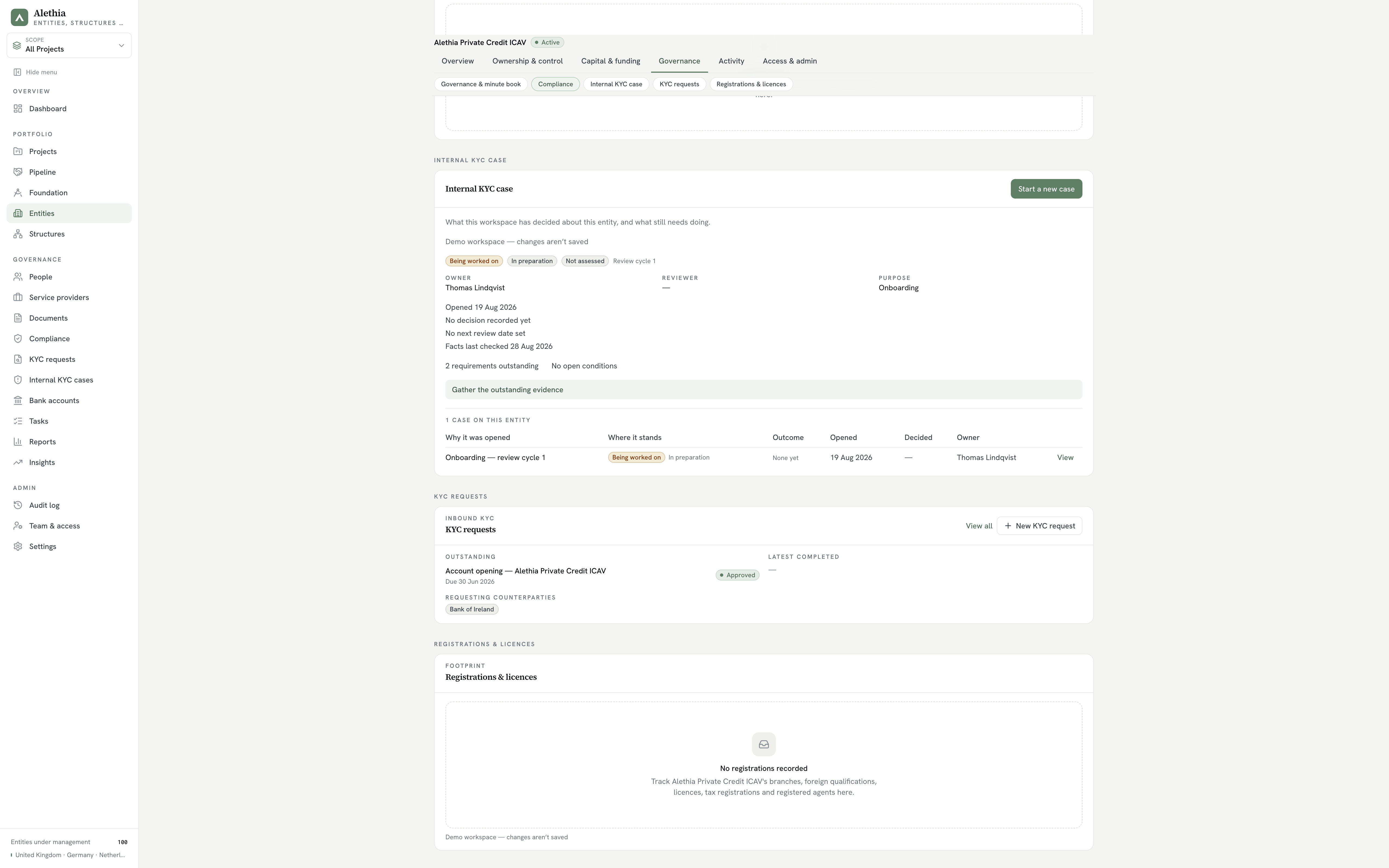
Your own KYC, on the record it is about.
A case is opened on the entity and lives on its Governance tab: who owns it, where it stands, what is still outstanding and what to do next, beside the inbound requests the same entity has answered. The checklist, the evidence, the sanctions screening, the risk rating and the decision sit on the case, and the nightly check raises a review when its date falls due or a document runs out.

Execute · Documents
Held against the entity it evidences, filed by what it is.
Constitutional documents, executed agreements, filings and KYC packs, linked to the entities they evidence and to a project, with the category under the name. When a file is uploaded the person says what it is and the date on it, and that answer, not the file name, is what a KYC checklist matches. Every file is virus-checked before it is opened, extracted or released.
Ownership and control
The chain the chart is drawn from.
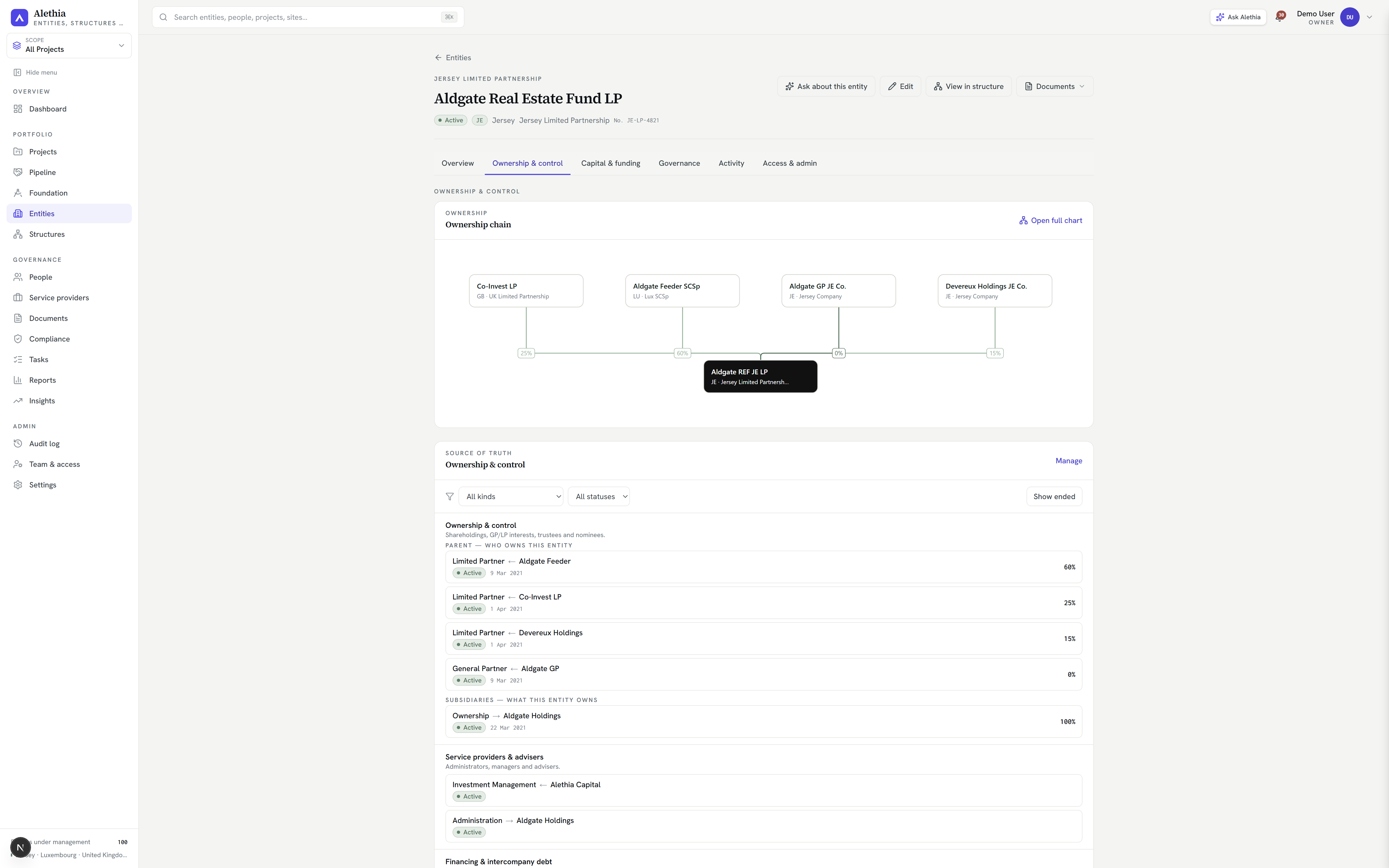
- Legal, voting and economic bases
- Multi-parent holdings
- Open full chart from the tab
Execute · Outside access
Let outside counsel work on the deal, then close the door.
Lawyers, administrators and company secretaries often keep entities up to date for you. Add them as collaborators and choose their entities, with subsidiaries if you like, and they file documents, update officers and keep bank mandates current themselves, with no re-keying and no shared logins.
Give their access an end date, such as when the deal is due to complete. After that day their access stops on its own. Until then you can change the date or remove them in one step.
- Their own sign-in, with two-factor authentication
- Only the entities you choose
- Access that ends on the date you set
- Identity documents and personal details collected for KYC stay hidden
Book a 30-minute initial call.
A first conversation, not a workshop. We show you the product on the demo workspace, answer your questions and tell you plainly whether it fits your structure.
Also: KYC & bank mandates · Security