For investment managers
Entity management with AI built in from day one.
Connect the AI assistant you already use, such as Claude or ChatGPT, and ask it about your funds, SPVs and filing dates. It answers from your Alethia record and sees only what you can see. Alethia keeps one record per entity, from deal to register, for fund managers, real estate, private credit and private equity firms, and other multi-entity groups use it too.
Built in London · Records and files in Google Cloud europe-west2 · Application servers in Vercel lhr1 · Two-factor authentication on every plan · Every file virus-checked
AI
Your AI assistant, connected to the record.
Alethia works with AI apps that support the Model Context Protocol, the open standard many of them use to connect to other software. Each person connects their own app and signs in as themselves, and it is read only unless your workspace turns changes on. It works on every plan, once a workspace admin allows it.
On the Governance plan, AI also works inside Alethia: it reads formation documents and agreements and proposes the record, drafts KYC answers from the documents you choose, and gives a supplier’s due diligence answers a first pass. Every suggestion waits for a person to approve it.
One governed record
Your structure, always current.
Entities, ownership, appointments, bank accounts, agreements, documents and obligations live in the same controlled record.
Update an entity once and the change flows through the structure chart, the compliance calendar, the KYC responses and the reporting. No separate spreadsheet to reconcile. No structure chart to redraw. No second version of the truth.
Built for
The firms that run many entities.
A manager’s funds, feeders, carry and co-invest vehicles, holding companies and special purpose vehicles sit in one register, with ownership by legal, voting and economic basis. Family offices, administrators and other multi-entity groups use the same record.
Structure charts
Drawn from the register, not kept as a drawing.
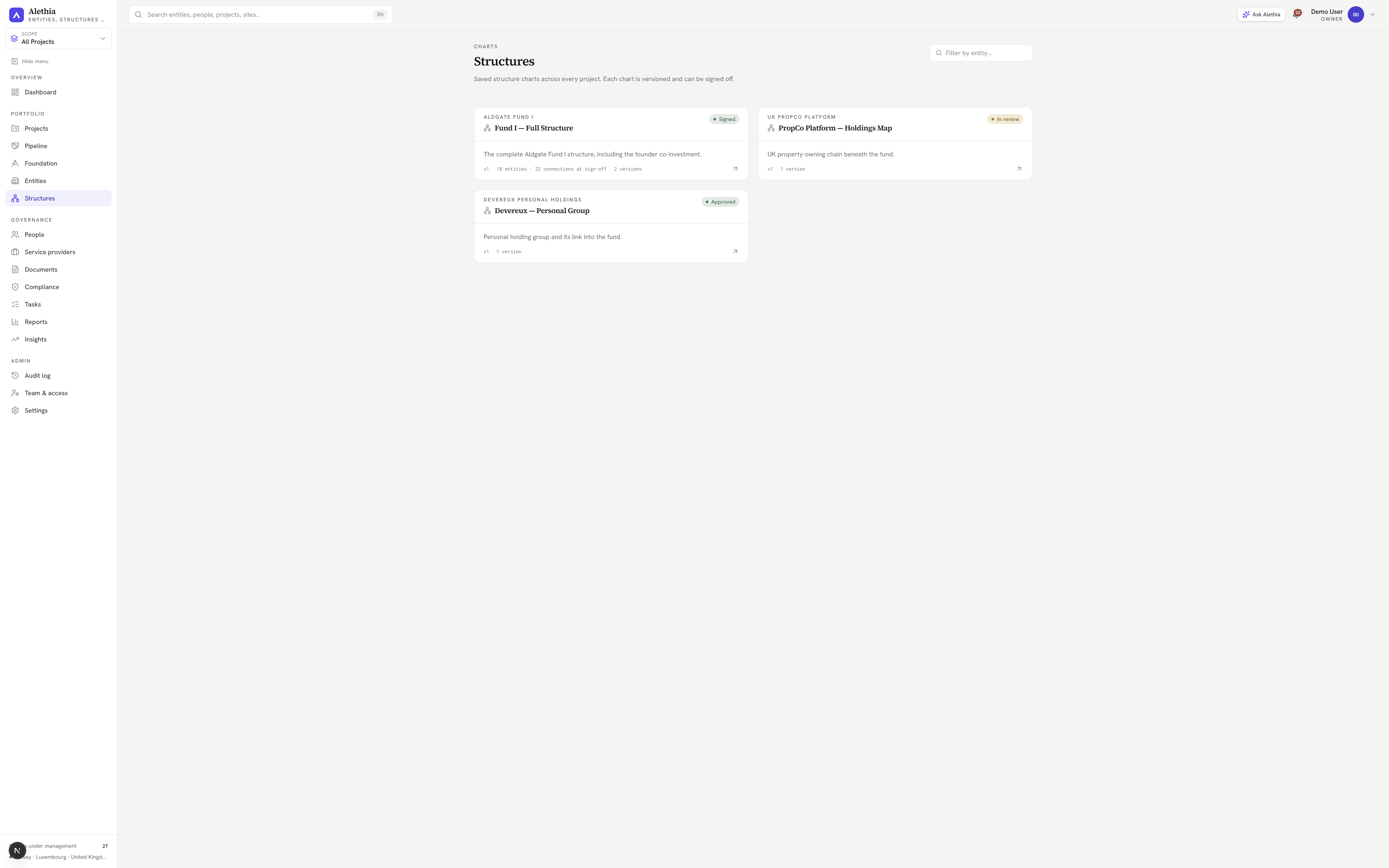
- 13 nodes · 13 connections
- Ownership, management and financing as three line styles
- Export to PDF, PowerPoint and Excel
Three stages
Three stages, one record.
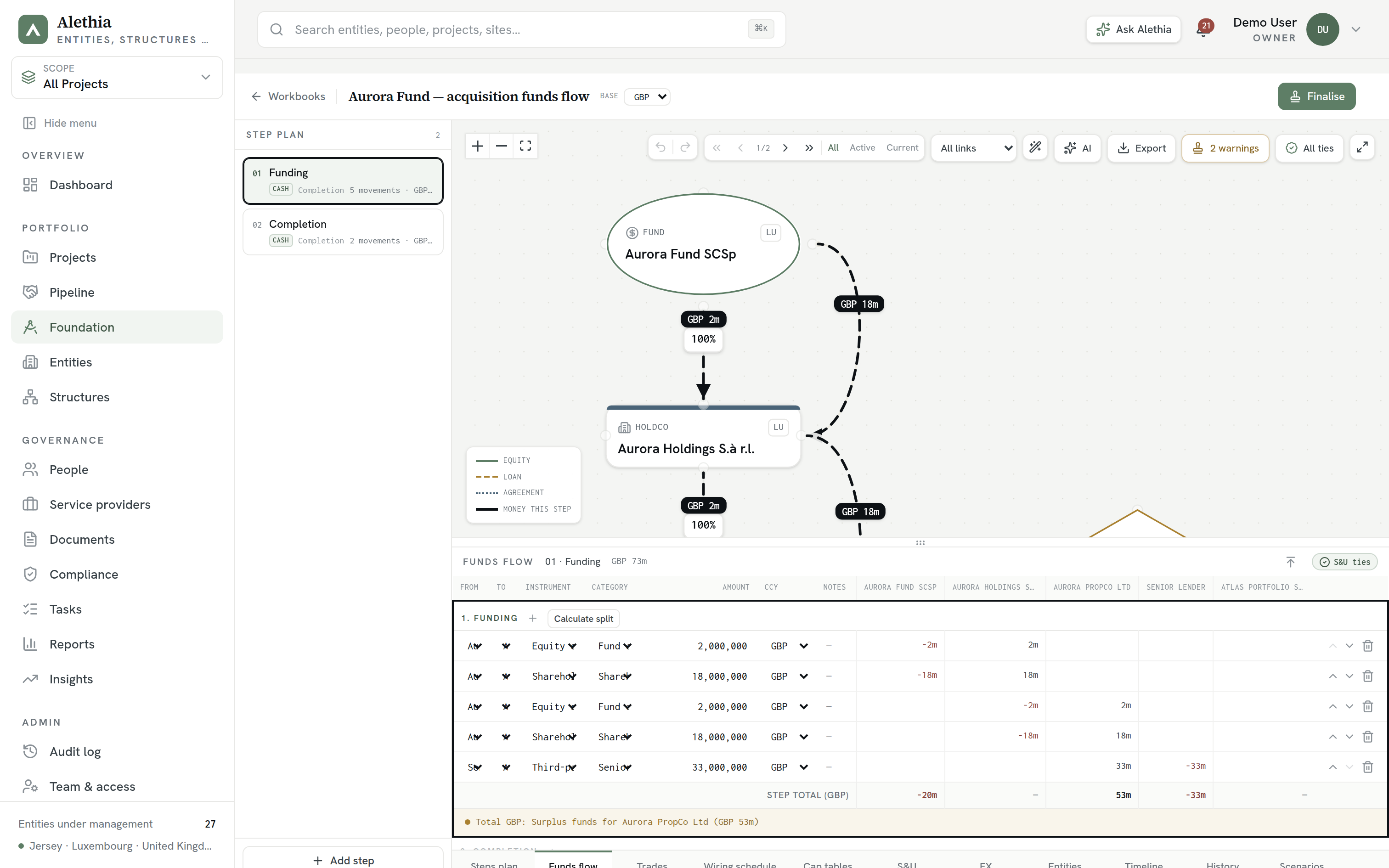
A deal starts in Pipeline as a card on the board. When it reaches Heads of Terms, a draft holding entity is created in the register. In Foundation you draw the funds flow: investors into the fund, equity and shareholder loans down the chain, the bank facility, the price to the seller. Sources and uses must reconcile before the flow is released. On completion the draft vehicles become entities in their jurisdictions, the equity legs become the structure chart and the loans post with their maturity dates.
Companies House and projects
Pull the registry data in, then group it your way.
Look up a UK company on Companies House and, once you confirm, pull its officers, people with significant control and filed documents into the record. Nothing is added until a person says yes, and it works on every plan, including Free.
Group entities into projects, such as a fund, a deal or a portfolio. One entity can sit in several projects, and you can manage the membership from the entity or from the project. Anyone can start free and add up to five managed entities.
From deal to register
Four screens, in the order a deal meets them.
01
Pipeline
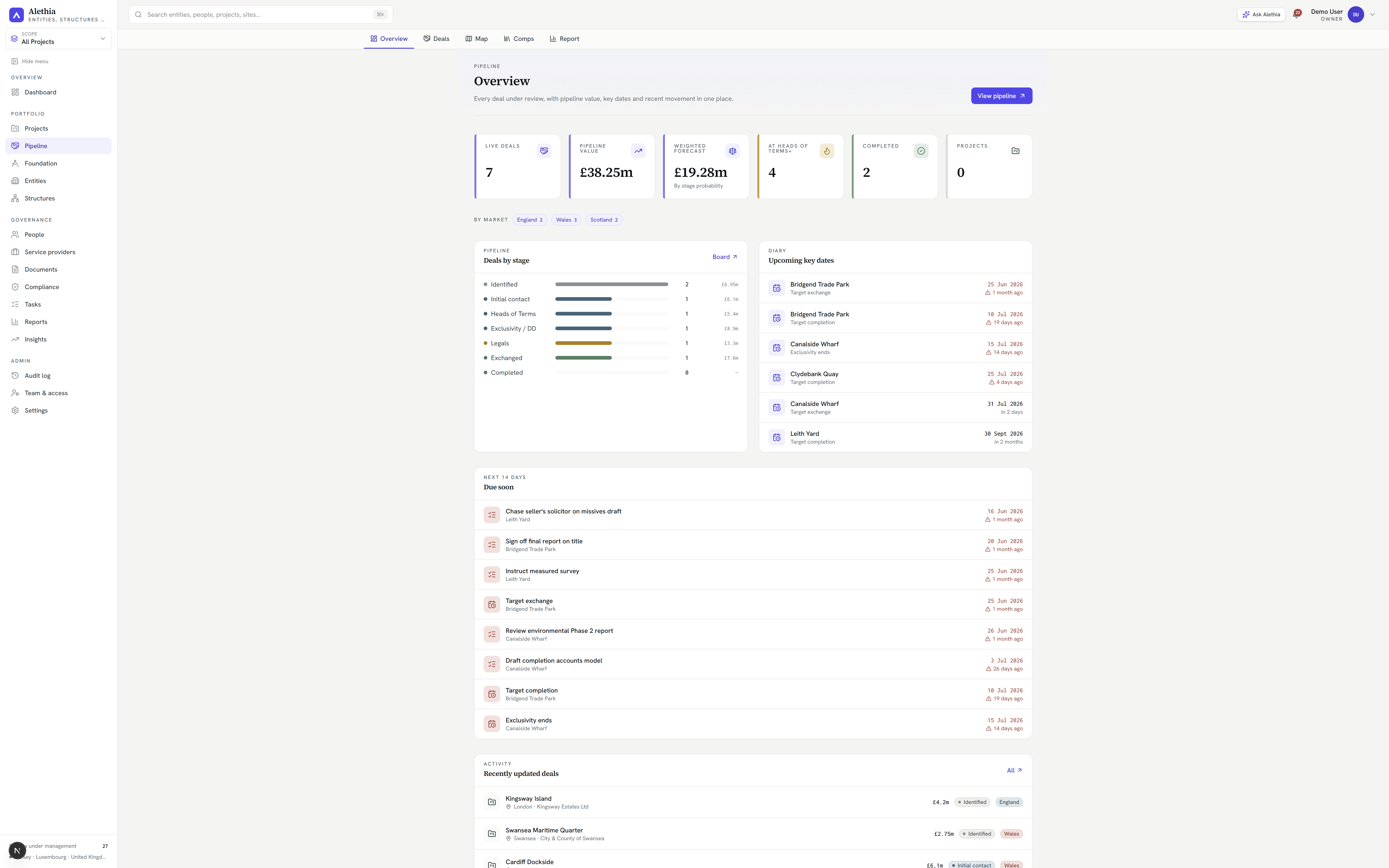
Deals in stage lanes with town, price, counterparty and days in stage. A draft holding entity is created at Heads of Terms and activated on completion.
02
Funds flow
Step 1, drawdown from investors: 65,000,000 GBP of LP interests into Fund LP. Step 2, equity and a shareholder loan from Fund LP to TopCo, then TopCo to BidCo.
03
Register
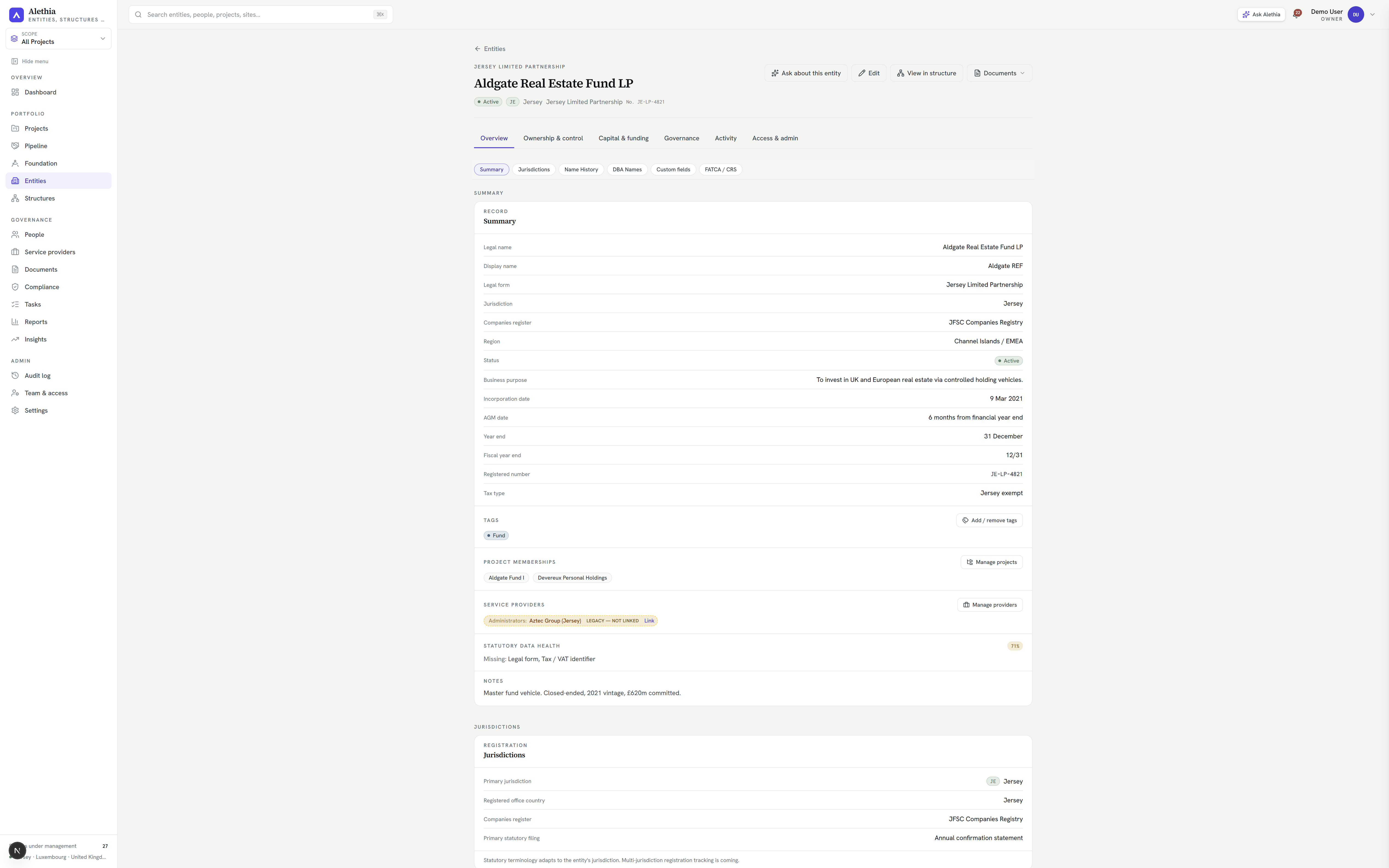
Aberdeen Harbour PropCo Limited, then the Aldgate carry, co-invest and feeder vehicles: jurisdiction, legal form, tags and project on every row.

04
Obligations
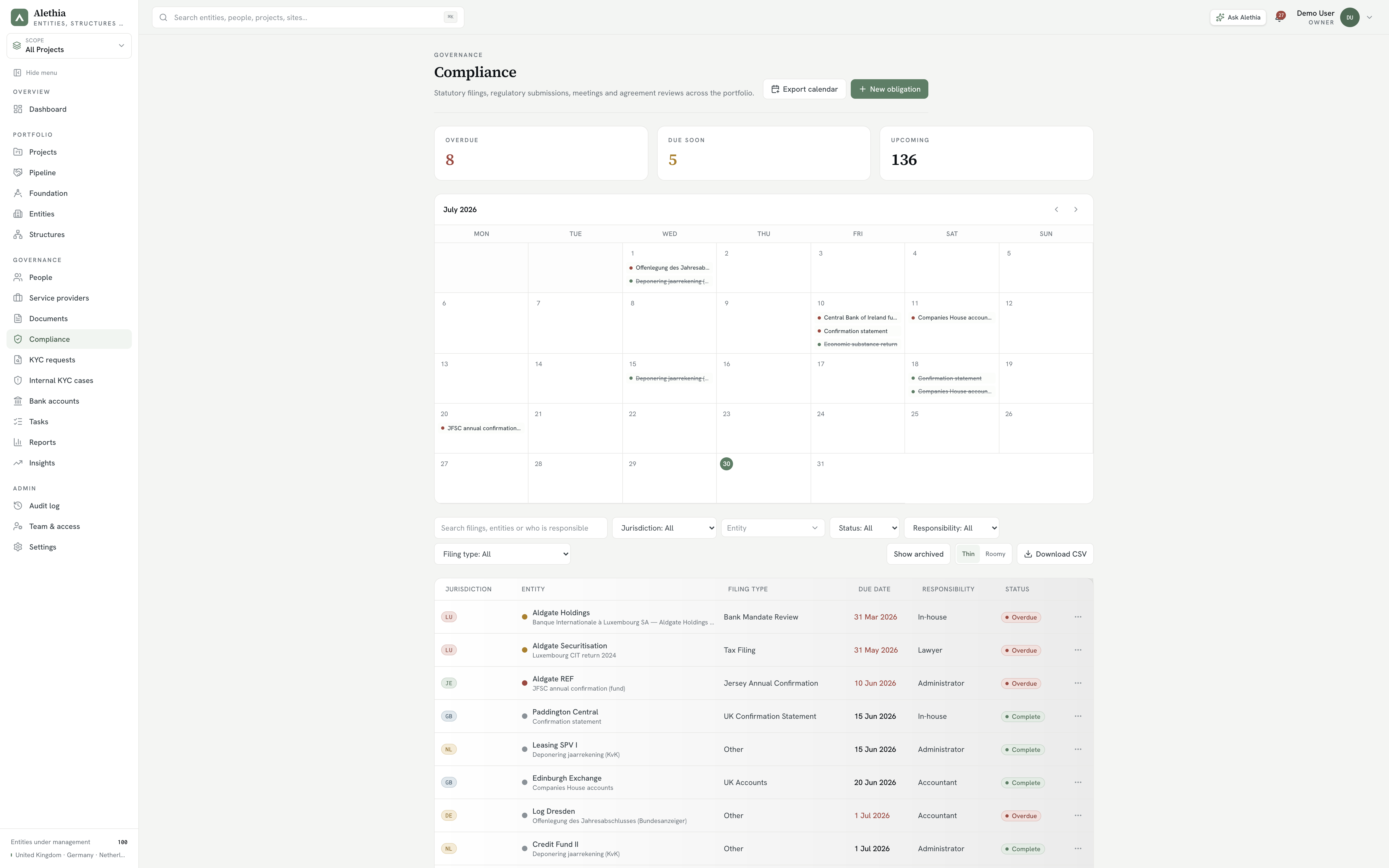
On the Governance plan: statutory filings, regulatory submissions, meetings and agreement reviews, each against the entity it belongs to, with a due date, the party responsible and a status.
What it is
A register
One controlled record per entity, person, bank account and agreement.
A funds-flow workbench
That posts into that register.
A deal pipeline
That creates the draft holding entity at Heads of Terms.
A KYC review
On the Governance plan: checklist, evidence, rating, decision and review date, on the entity it is about.
Hosted in London
Records and files in Google Cloud europe-west2, application servers in Vercel lhr1.
Free for up to five managed entities
Not a trial. KYC and compliance are on the Governance plan.
What it is not
Not a drawing tool
Every box on a chart is an entity record.
Not a data room
Documents are held against the entity and agreement they evidence.
Not an AI that acts alone
AI features draft and extract for a person to approve, and never write to the record on their own.
Not per-seat pricing
Paid plans are priced by active managed entities, with named users included.
Not a black box
AI drafts quote the document or answer they rely on, and a person approves every change.
Execute · KYC and mandates
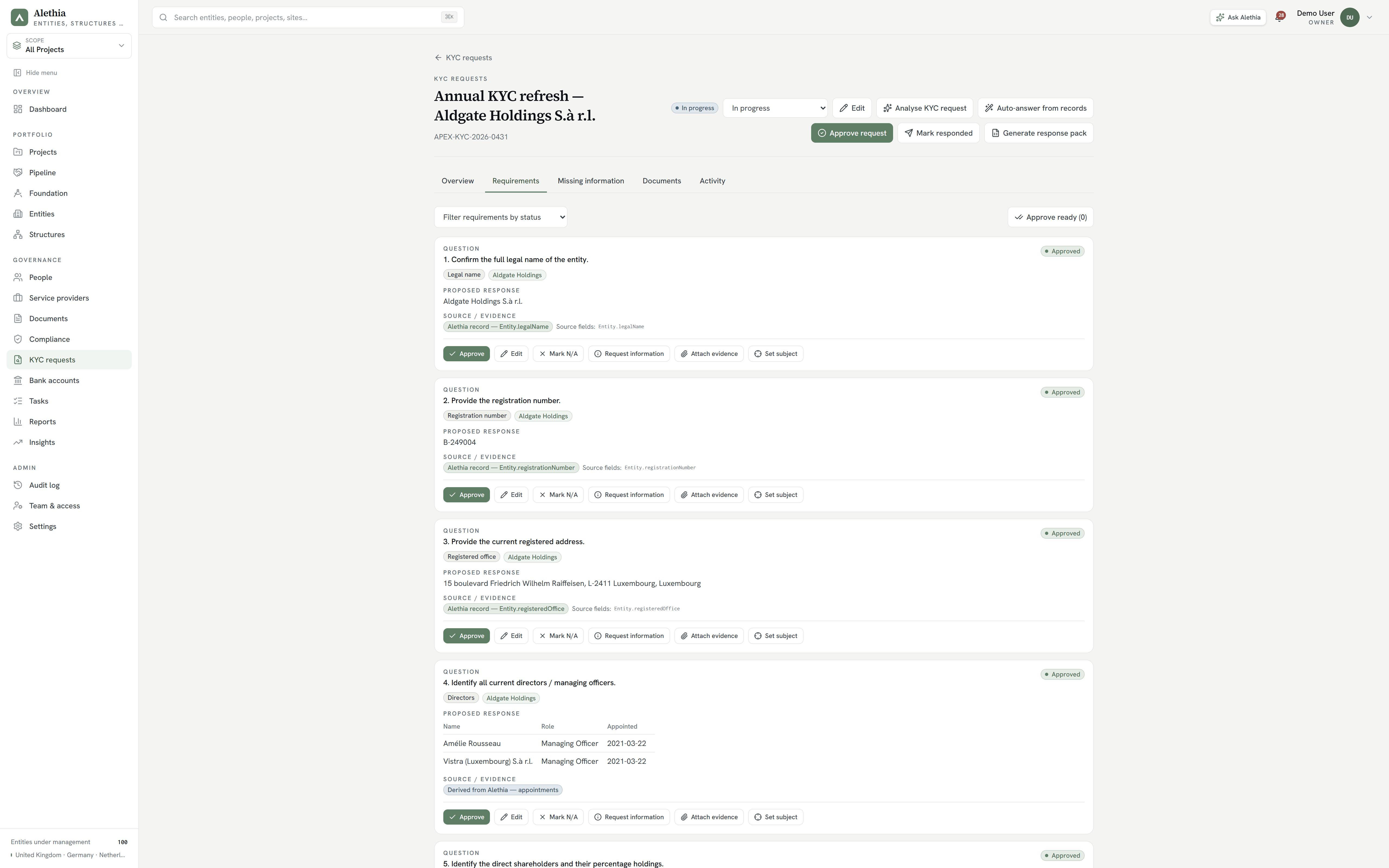
KYC answered from the record, with the source field named.
On the Governance plan, a counterparty’s request is broken into requirements. Each gets a proposed response drawn from the entity record, with the field it came from shown beside it, and a person approves it. The bank accounts, signatories and mandates behind the banking questions sit on the same record.
Execute · KYC reviews
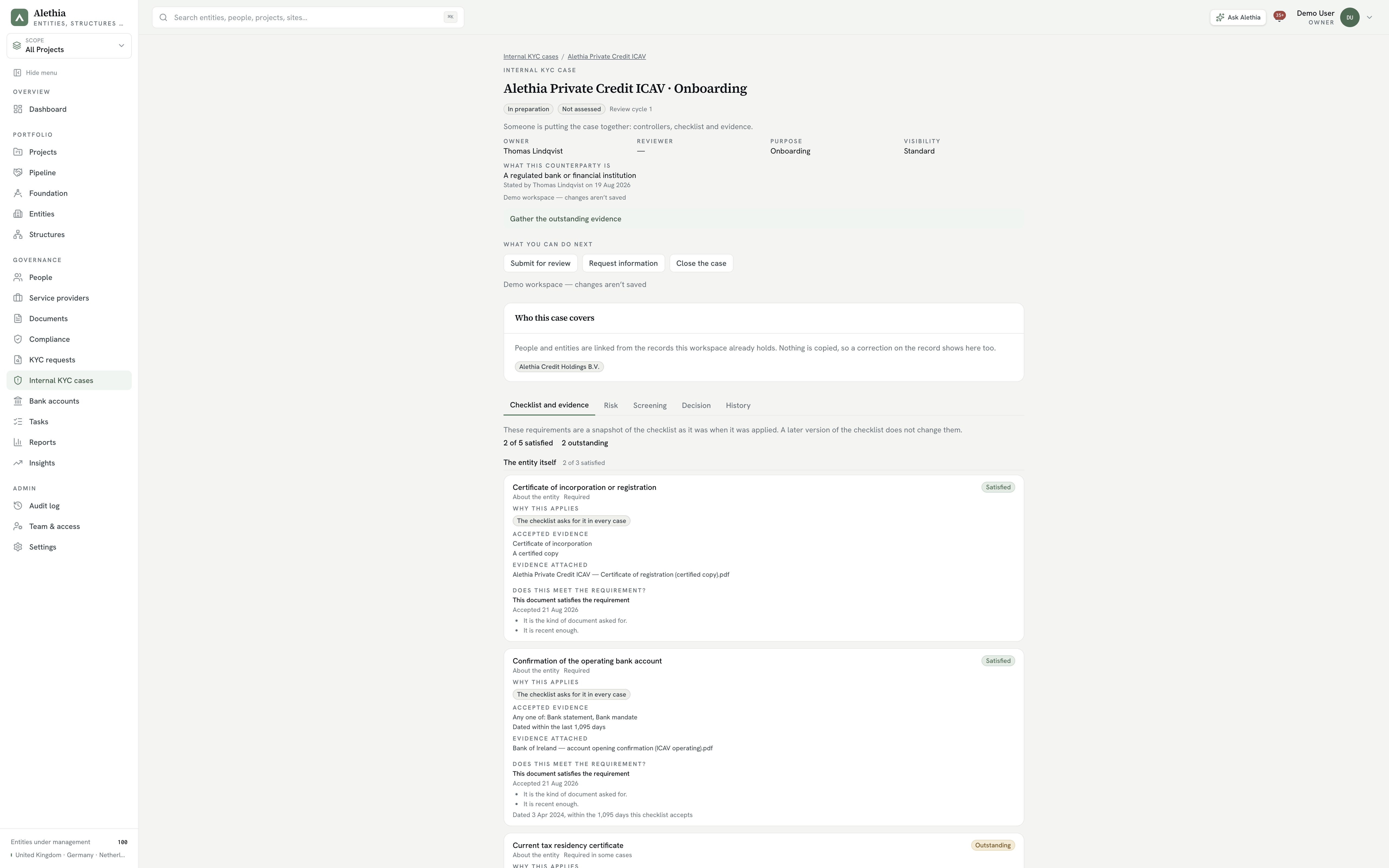
Your own KYC, run as a case.
On the Governance plan, open a case on any entity and apply a checklist: one of those supplied for each entity and counterparty type, or your own. Work it requirement by requirement, seeing which documents satisfy it, which are missing and which are about to run out, then record a risk rating and a decision by a second person, with a review date the calendar chases.
Execute · Loan Book
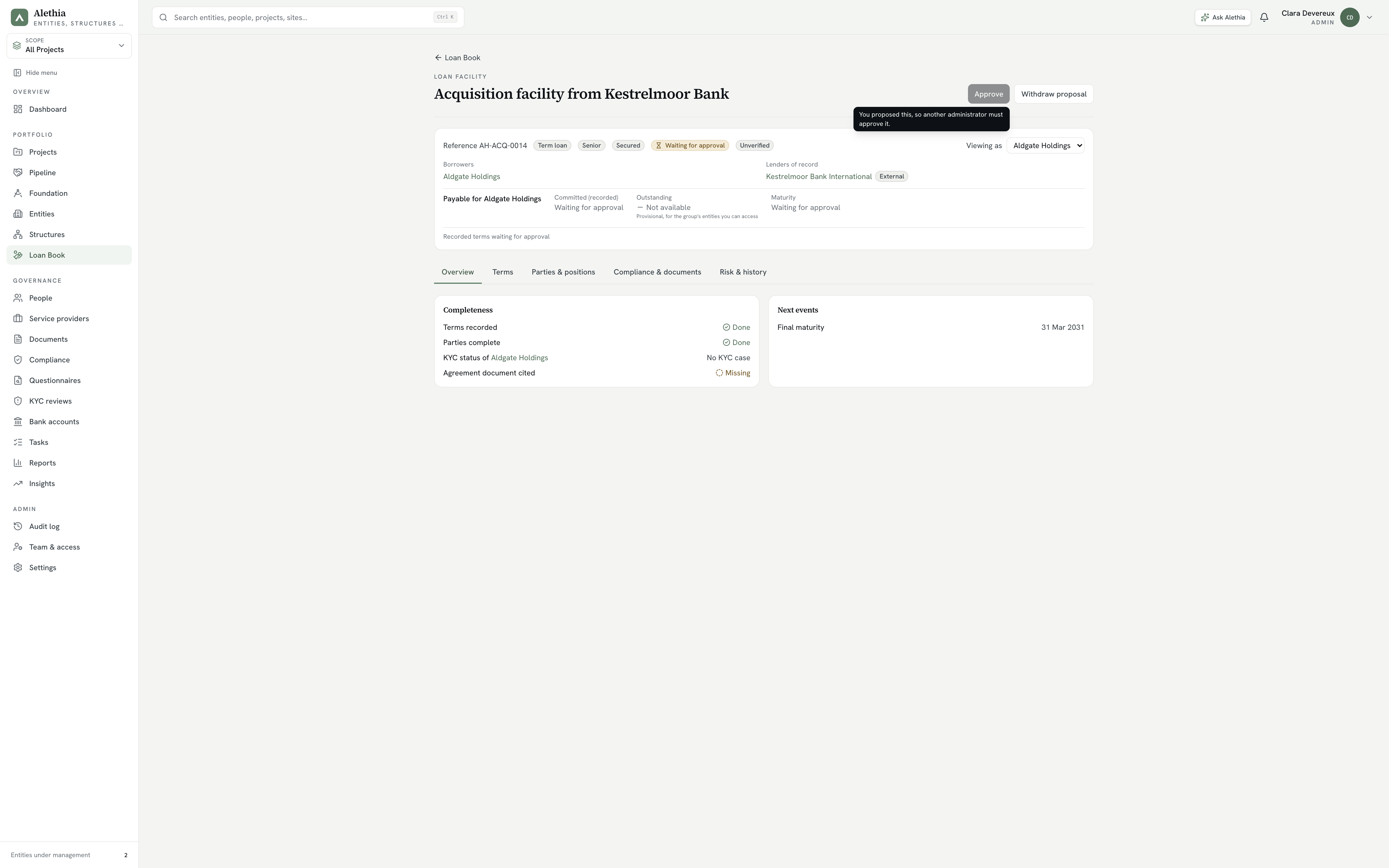
Loans and facilities, approved before they are recorded.
Keep a register of the loans your vehicles lend and borrow, with a page for each facility and each entity's loans on its own record.
Every new loan and every change is a proposal until it is approved, and a proposal waiting for approval shows as such in the register. The person who proposed it cannot approve it. When nobody else can approve, the only administrator may approve their own proposal, and the record says it was approved that way. Approving needs a recent sign-in with a second factor.
On the Governance and Enterprise plans.
Questions
What Alethia is, and who it is for.
What is Alethia?
Alethia is entity management built for investment managers: fund managers, real estate, private credit and private equity. It keeps a governed register of entities, ownership, officers and documents, generates structure charts from that data, and plans transaction funds flows, in one system. Other multi-entity groups use it too.
Who is Alethia built for?
Investment managers first: fund managers, real estate, private credit and private equity firms, and the corporate services, finance, legal and compliance teams who maintain their structures. Family offices and other multi-entity groups use it too.
Can Alethia build structure charts?
Yes. Structure charts are generated from the entity and ownership data you already hold, not maintained as separate drawings, so the chart is always consistent with the register.
Can Alethia manage Luxembourg and UK SPV structures?
Yes. Alethia is designed for cross-border corporate structures: UK holding companies, Luxembourg and Jersey SPVs, and the ownership, appointments and compliance that connect them.
Does Alethia support private equity and fund structures?
Yes. It models funds, GPs, LPs, holdcos and propcos, tracks legal, voting and economic ownership, and plans the funds flow that creates the structure at closing.
Can we run our own KYC in Alethia, not just answer requests?
Yes. Open a case on an entity, apply a checklist from the library supplied for each entity and counterparty type, or one of your own, attach evidence that says what it is, record a risk rating and a second-person decision, and set a review date the calendar chases. KYC and compliance are on the Governance plan, not the Free plan.
Where is Alethia built and hosted?
Built in London. Workspace records and uploaded files are stored in Google Cloud's London region (europe-west2), the application runs in London (Vercel lhr1), and every file is virus-checked before anyone downloads it.
Can I import entities from a spreadsheet?
Yes. In Settings, Import data, an owner or admin fills in a workbook template, Alethia checks every row, and nothing is written until you confirm. An import can be undone for seven days, while nothing it wrote has been changed. A list of entities can also be pasted or uploaded as a CSV on the entity register.
Can we give outside lawyers or administrators access for a limited time?
Yes. Add them as collaborators, choose the entities they work on and, if you like, the day their access ends. They sign in with their own password and two-factor authentication, can change only those entities, and lose access at the end of that day, or straight away if you remove them.
Does Alethia connect to Companies House?
Yes, on every plan including Free. Look up a UK company and, once you confirm, pull its officers, people with significant control and filed documents into the record. Nothing is added until a person says yes.
Is there a free plan?
Yes. Anyone can sign up with a work email and manage up to five entities free, for as long as they like. KYC and compliance are on the Governance plan.
Book a 30-minute initial call.
A first conversation, not a workshop. We show you the product on the demo workspace, answer your questions and tell you plainly whether it fits your structure.